Bang for Your Beans: The Power of Pulses in Everyday Eating & Podcast: Bang in Some Beans!
Why? Because they’re a nutrition powerhouse.
They are high in protein and fibre, one of our ‘5 a day’, low in saturated fat and cholesterol free.
Out of all the food groups legumes offer the greatest gains for life expectancy. They’re much cheaper than other protein sources (see below how to ensure you achieve adequate protein on a plant-based diet) and they’re better for the environment.
But we’re not eating enough of them. We should be eating far more beans than we generally are. As a nation we need to “BangInSomeBeans” which is a new initiative from the UK charity The Food Foundation.
Why all the fuss about fibre? Because we need fibre for our gut biome, a healthy digestion and to reduce risk of several chronic diseases. We should be consuming 30grams of fibre a week but 96% of adults do not eat enough.
UK adults eat 50% more protein than is recommended (British Nutrition Foundation 2025). The UK therefor does not have issues with protein deficiency at all population level as can be the case in low and middle income countries. Fibre is much more of an issue.
When does an avergae bean become a Great Bean? In my opinion, when it comes from the Bold Bean company
Until I was ‘encouraged’ to try Bold Beans’ Queen Chickpeas, I had no idea, what a difference there could be in a simple bean!
Now a whole new passion has emerged.
Delicious, satiating, nutritious and fabulously versatile, Quick and easy to use.
We all enjoy different flavours and textures and luckily Beans can do it all.
Butter bean mash - “it’s like the creamiest mashed potato” but “it keeps my energy going all afternoon, unlike potatoes” Paul’s favourite
Creamy butter bean, leak and mushroom bake with a chestnut/rye and oat crunchy topping.
Super Smooth Hummus - blitzed in minutes with tahini, lemon juice, garlic, spices of your choice - and for me I love to chuck in some beetroot. Lunch on the table in 3 minutes!
Carlin Peas are my latest discovery . Yummy. As described by the Bold Bean Company - ‘it’s when a chickpea and lentil has a baby’. Nutty rich delicious mixed in your lunch box, or stirred through roasted vegetables or a tomato sauce with pasta or grains.
Spicy Black Bean Chilli - a real depth of flavour and a favourite with my family.
The world’s your oyster. (Or your bean jar)
I challenge you to give them a try.
Your body, your budget and the planet will thank you.
HOWEVER, if you do not currently eat many legumes, I do suggest you start by gradually adding them into your diet. it can take a while for our gut to become acclimatised to the extra fibre
A strategy to ensure that plant-based meals contain adequate amounts of all the essential amino acids required for protein intake, combine beans and grains . This is because grains contain methionine which beans don’t contain. (See page 25 in the full article linked below)
Podcast: Bang in Some Beans!
This podcast by The Food Foundation is a great listen. It looks at why beans should play a much bigger role in the way we eat – both for our health and the planet.
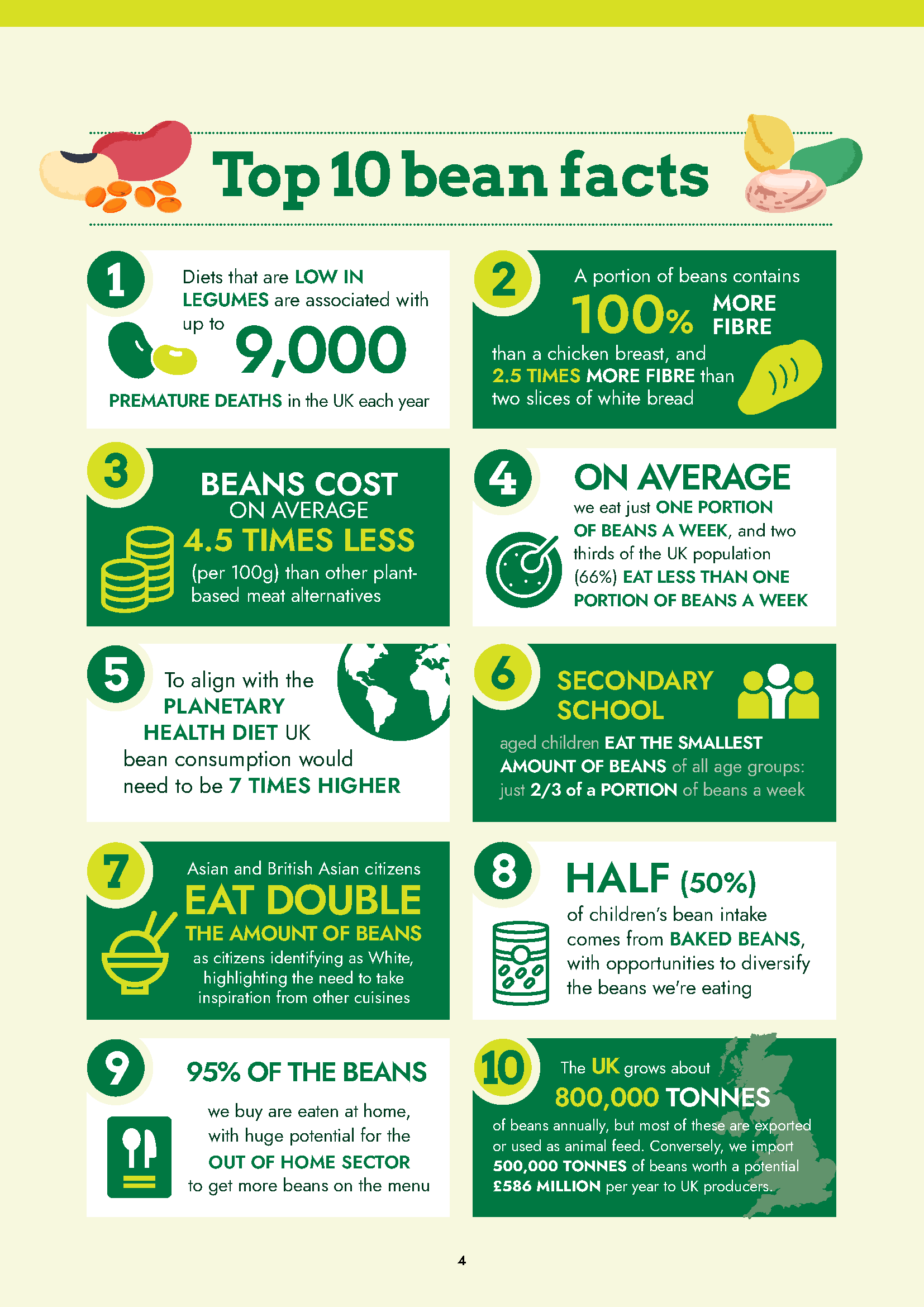
Bean Facts – Courtesy of The Food Foundation
Our current food system is driving soaring levels of diet-related disease as well as catastrophic levels of nature loss and climate change. We're pushing our planet past the point of no return. So great are the challenges our current food system is facing, as well as directly impacting on, that it is sometimes hard to remain positive about the future.
Shifting diets so they are healthier and more sustainable will require different production practices as well as, crucially, a transition towards more plant-rich diets. Yet when it comes to the detail there is often disagreement as to the exact nature of the shifts required.
Enter, beans.
A real-life ‘superfood’, they're a triple win for health, climate and affordability objectives and a rare example of a food that pretty much everyone can agree delivers on multiple fronts.
This briefing aims to summarise the many benefits of increasing bean consumption and production in the UK. It begins to unpack how many beans the UK eats, and from where, in order to support food system stakeholders to identify where they could act to increase production and consumption.
Jars vs Tins: Does It Make A Difference?
A Closer Look at Beans: Why Preparation Matters
Not all beans are prepared in the same way, and this can make a real difference to both digestion and flavour.
Some producers use longer soaking and cooking methods which help break down the natural sugars found in beans. These sugars, called oligosaccharides, are one of the main reasons beans can sometimes cause bloating or digestive discomfort.
When beans are soaked for longer before cooking, some of these sugars begin to break down. The soaking liquid is then discarded and replaced with fresh water before cooking. This process helps reduce some of the compounds that can be harder for our bodies to digest.
Longer cooking methods also soften the beans and improve their texture, making them easier to chew and digest.
Some jarred beans are prepared this way, which can make them naturally softer and more flavourful compared with many canned beans that are cooked quickly under high heat for shelf stability.
The key takeaway is that how beans are prepared matters just as much as the beans themselves. Choosing good quality beans and introducing them gradually into your meals can help your body adjust while still giving you all the nutritional benefits pulses have to offer.
Recipe Ideas to Try
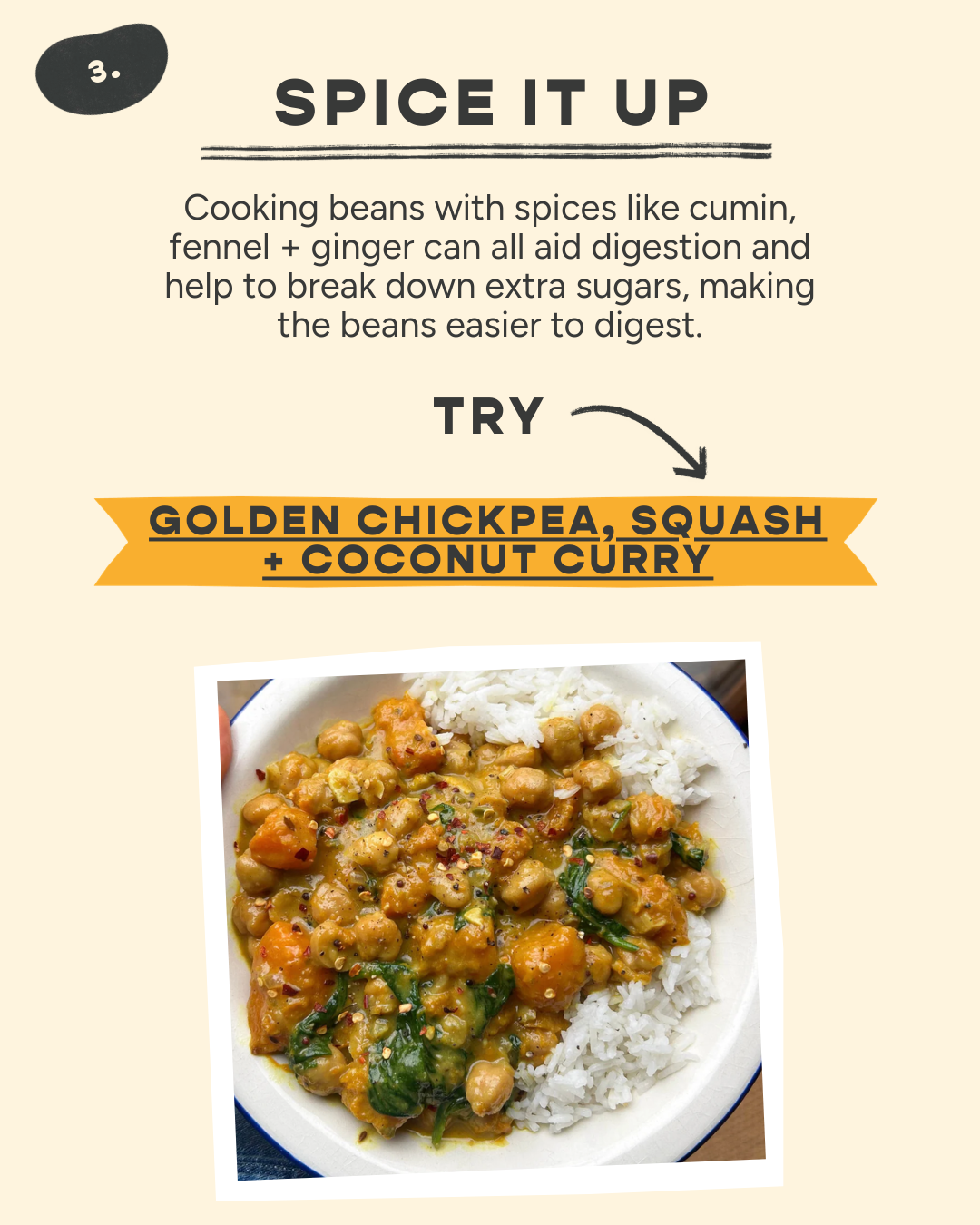
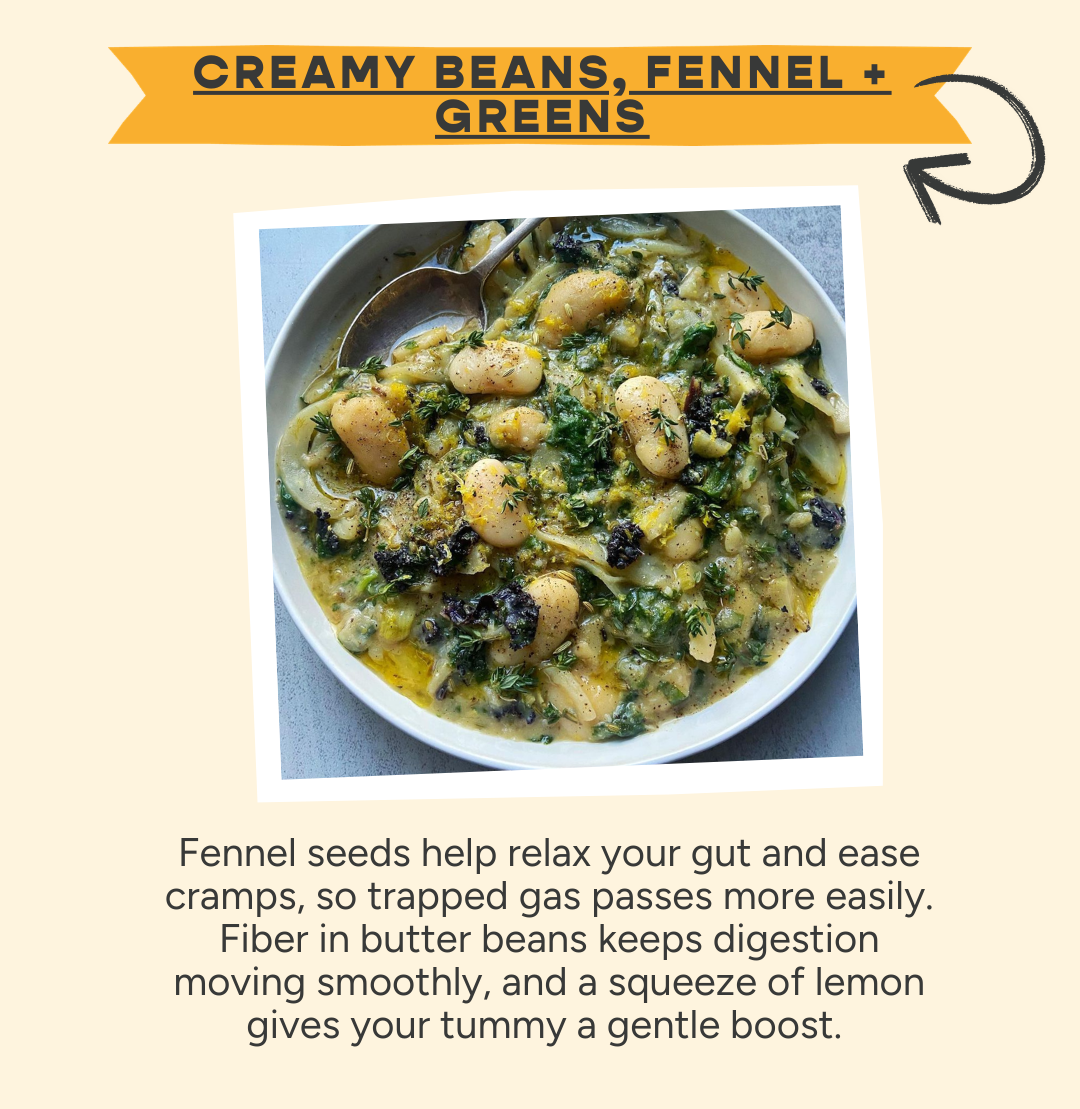
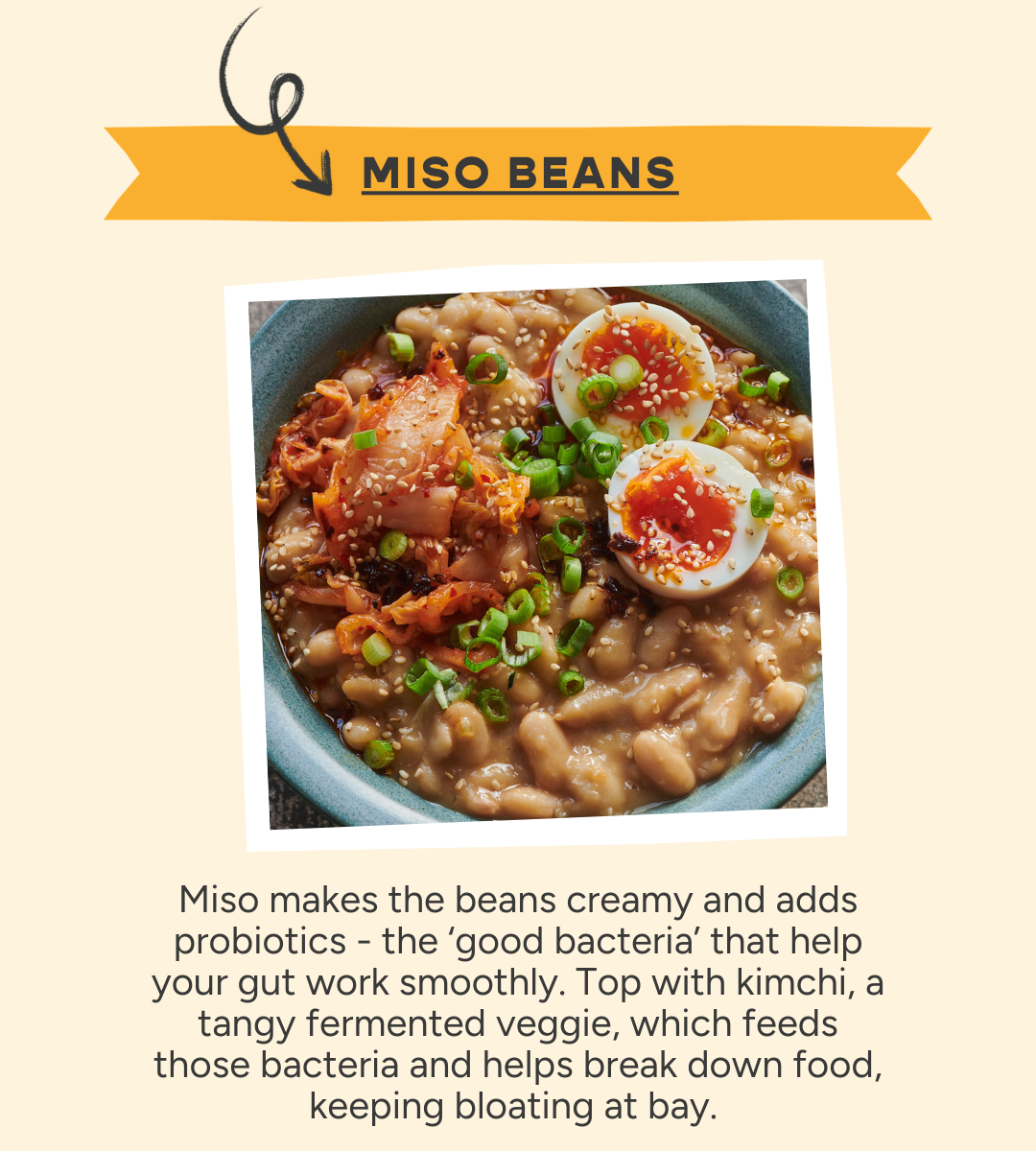
If you’re looking for simple ways to include more beans in your meals, here are a few easy recipe ideas from Bold Bean Co. that are both nourishing and satisfying. Click on the images to see the full recipes.